micro1 Review (2026): $12K Earned on $80–$90/hr Projects and the Zara Interview
Some links here are referral links. If you sign up and do paid work, the platform may pay me; it costs you nothing. Full disclosure.
micro1 is one of my two top picks for AI training work. My three projects have paid $80–$90 an hour, and micro1 has paid me $12,408.75 so far. When a project’s active I usually put in 10–20 hours a week. The tricky part is getting a role: it took me 17 applications to land those three.
I sent my first application on July 8, 2026, failed my first Zara interview, and still got my first role on July 13.
| My micro1 experience | Result |
|---|---|
| First application | July 8, 2026 |
| First role | July 13, 2026 |
| Roles applied to | 17 |
| Projects worked | 3 |
| My project rates | $80–$90/hr |
| Hours during active projects | Usually 10–20 per week |
| Project lengths so far | A few days, about three weeks, and one still running in October 2026 |
| Additional responsibility | Promoted to reviewer on one project |
What the work is
micro1 places contractors with AI labs to produce what it calls expert-demonstrated data. The work ranges from evaluating model responses and annotating specialist content (law, finance, healthcare, marketing, engineering) to hands-on tasks for robotics and frontier-model labs.
My own tasks are confidential, but I was promoted to reviewer on one project, which added responsibility on top of the contributor work.
What micro1 has paid me
Here’s where my micro1 earnings stood in October 2026, three projects in. My last payout was $2,415.12:
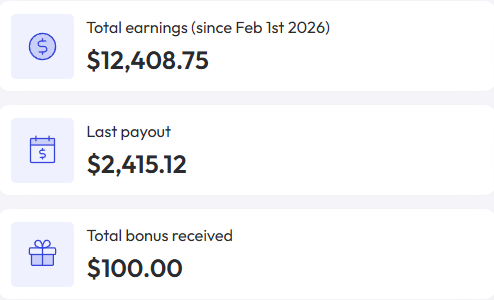
On top of the hourly rate, bonuses have added $100 so far. They depend on the project, and some projects don’t have them at all, so I wouldn’t count them as part of the rate.
Rates on open roles
Plenty of micro1 roles pay less than my projects, and some pay a lot more. These are the ranges listed across the 226 roles on micro1’s opportunities page in July 2026:
| Role type | Real listed range |
|---|---|
| Transcription & data entry | $6–$20/hr |
| Annotation & evaluation | $20–$45/hr |
| Common-language experts (Spanish, French, …) | $10–$40/hr |
| Rare-language experts (Tongan, Tibetan, Hmong, …) | $40–$95/hr |
| Business & domain specialists | $20–$70/hr |
| Science PhDs & professors | $40–$90/hr (to $160 for senior adjudicators) |
| AI safety & security experts | $50–$90/hr |
| Legal & finance professionals | $80–$150/hr (to $210) |
| Software engineers | $30–$120/hr (senior roles to $230) |
The spread can be wild. In that snapshot, a Tongan bilingual expert role listed $45–$95/hr, while Spanish transcription listed $10–$20/hr (different jobs, so it’s not apples to apples).
When you apply, you name your expected hourly rate. The listing gives you a range, and some ranges are wide enough (a pathologist role listed $8–$100/hr) that what you ask for matters, because it can affect whether you’re picked. A micro1 employee recommended entering a rate you’d be comfortable accepting instead of selling yourself short.
Where micro1 can hire
micro1’s experts page says it can’t hire residents of 21 countries and regions: Afghanistan, Belarus, China, Cuba, the Democratic Republic of the Congo, Ethiopia, Hong Kong, Iran, Iraq, Libya, Macau, Myanmar, North Korea, Russia, Somalia, South Sudan, Sudan, Syria, Ukraine, Venezuela, and Yemen.
Some roles are narrower than that: US-only, or limited to the US, UK and Canada. Make sure you’re eligible for an opening before you sit an interview for it.
The application: Zara, the AI interviewer
I go after fresh openings that fit my background and check back often; the current AI training jobs finder lets you browse openings by recency.
Applications ask for your resume, weekly availability, expected rate, and a few role-specific questions. A first application can then send you to a 20–40 minute recorded interview with Zara, micro1’s AI interviewer. That range comes from micro1’s interview guide. Later steps depend on the role.
Since August 6, 2026, micro1 reuses qualifying Zara interview results for new applications. Zara checks the role’s required skills against interviews you’ve done in the last year that met micro1’s minimum certification criteria, then asks only about the skills you haven’t passed. The Talent Portal calls that a Partial interview. If your past interviews already cover every required skill, you skip the interview entirely and the portal labels it Fast-Track.
For me, partial interviews have been the biggest change. Several have taken about eight minutes, which makes applying broadly a lot easier than sitting through a full interview for every role.
How I approach the Zara interview
The interview can be tough, but Zara is my favorite AI interviewer of the platforms I’ve tried. Here’s what I’d keep in mind:
-
Be honest, don’t try to apply for a job that you aren’t a good fit for.
-
Be ready to explain the experience you mention. In one interview I brought up optimizing Python code, and Zara followed up with kernel-level optimization questions. Be clear about what you personally did and where your knowledge ends.
-
Zara is hard on “I don’t know.” If you hit a gap, don’t stop there. Explain the part you do know and reason through the rest out loud. Sometimes just talking it through with Zara gets you to the answer.
-
When you fail, hit the button asking for detailed feedback and really think about how you should have answered each question.
-
Recruiters can review the recording, so treat it like a professional interview. Don’t try to game the AI.
How long the projects last
My three projects have been very different:
- one lasted only a few days
- one lasted around three weeks
- one is still running in October 2026
The long one is why micro1 is one of my top picks. The short one is the warning: getting selected tells you nothing about how long the work will last. I haven’t landed a fourth project, so that long one is my only micro1 work right now.
The downsides
I’ve seen full-time roles mixed into the opportunities alongside AI training work. Read the work description, contract type, and expected hours. One tell I use when a listing looks like a regular job: if it has more than one opening, it’s usually an AI training role.
Interviews are still per role, too. If a role needs skills you haven’t passed yet, it can still mean a full-length interview.
Verdict: who should apply
micro1 is worth your time. It’s rewarded the hours I’ve put into applying, failed first interview and all.
Get the easier applications that can sit in the background out of the way first, like Handshake AI and Mercor. Then I’d put most of your active application time into fresh micro1 openings that closely match your real skills. Once you’ve built up some qualifying Zara results, partial interviews make that much cheaper. If you’re still choosing a platform, start with my platform comparison.
Decided it fits? Apply directly; the link below is my referral and costs you nothing.
Apply to micro1 ↗Frequently asked questions
Is micro1 legit?
Yes. All three of my micro1 projects have paid out, and my earnings there passed $12,000 by October 2026.
How much does micro1 pay?
It depends a lot on the role. micro1's July 2026 listings ran from $6/hr for transcription and data entry up to $230/hr for senior software engineers. You set your own expected rate in the application, and my three projects have paid $80–$90/hr.
What is the Zara interview?
Zara is micro1's AI interviewer. micro1 puts a full recorded interview at 20–40 minutes. If interviews you've done in the past year already cover some of a new role's required skills, Zara asks only about the rest, and those shorter interviews have taken me about eight minutes.
Do I need a computer science degree for micro1?
Not necessarily. The listings I've looked at include languages, transcription and annotation work alongside software engineering. Some specialist openings do require a degree, license or professional experience, so go by the qualifications on the specific opening.